

A pond water test kit tells you what your fish are living in before problems show up. For a backyard pond with goldfish or koi, the four most important tests are ammonia, nitrite, pH, and KH. Ammonia and nitrite should read zero, pH should sit between about 6.5 and 8.5, and KH should be at least 50 ppm, with 100 ppm or more even better. Nitrate is worth checking too, mostly because it feeds algae.
PondBrief is a participant in the Amazon Services LLC Associates Program, an affiliate advertising program designed to provide a means for sites to earn advertising fees by advertising and linking to Amazon.com. As an Amazon Associate, we earn from qualifying purchases.
The catch is that the numbers on the color chart do not explain themselves. The same ammonia reading can be harmless in one pond and dangerous in another. Use the checker below to rate your results and get a plain next step, then save each test to your own log so you can see where your pond is heading.
Table of Contents
Check Your Pond Water Test Results
Type in whatever you tested and leave the rest blank. If you add pH and water temperature along with ammonia, the checker also works out how much of that ammonia is in its toxic form. Bookmark this page and come back each time you test, because your log is saved in your browser.
Pond Water Test Checker and Log
Type in the numbers from your test kit or strips. Leave a box empty if you did not test it. The checker rates each result, and Save adds it to a log kept in this browser so you can track your pond over time.
Enter at least one reading and press Check results.
My test log
Your log stays in this browser on this device. Nothing is sent to us. Clearing your browser data will erase it, so download a copy now and then.
Pond Water Test Checker by PondBrief.com. Ranges are general guidance for backyard ponds with goldfish or koi, drawn from university Extension and aquaculture fact sheets. It is not a substitute for a fish health professional.
Safe Ranges for Pond Water at a Glance
These are the ranges the checker uses. Sources do not all agree on the exact cutoffs, especially for KH and nitrate, so treat them as sensible targets rather than hard laws. Steady readings matter as much as perfect ones. Fish handle a slightly odd number far better than a sudden swing.
| Test | Aim for | Watch | Act now |
|---|---|---|---|
| Ammonia (total) | 0 ppm | Any reading above 0 | Above 0.25 ppm |
| Toxic (free) ammonia | Under 0.02 ppm | 0.02 to 0.05 ppm | 0.05 ppm or more |
| Nitrite | 0 ppm | Any reading above 0 | 0.1 ppm or more |
| Nitrate | 20 ppm or less | Above 20 ppm | No set limit. Lower it if algae is a problem |
| pH | 6.5 to 8.5 | 6.0 to 6.5 or 8.5 to 9.0 | Below 6.0 or above 9.0 |
| KH (carbonate hardness) | 50 ppm or more, ideally 100 or more | 20 to 50 ppm | Below 20 ppm |
Why the Same Ammonia Reading Can Be Safe or Deadly
Ammonia comes from fish waste and leftover food, and a pond filter‘s main job is to remove it. Most test kits measure total ammonia. Only part of that total is in the form that harms fish: free, or un-ionized, ammonia. The rest is a much less toxic form that fish tolerate far better.
How much of the total is toxic depends on pH and temperature. The higher the pH, the bigger the toxic share. It grows about tenfold for each 1-point rise near neutral pH, and a little less at higher pH. Warm water pushes it up further. Here is how much of each 1 ppm of total ammonia is in the toxic form, based on the Southern Regional Aquaculture Center fact sheet on ammonia in ponds:
| Pond pH | At 68°F (20°C) | At 86°F (30°C) |
|---|---|---|
| 7 | 0.004 ppm | 0.008 ppm |
| 8 | 0.038 ppm | 0.074 ppm |
| 9 | 0.28 ppm | 0.45 ppm |
So 1 ppm of ammonia in a cool pond at pH 7 is a warning sign, but the same 1 ppm in a warm pond at pH 9 is about nine times the level where gill damage starts. That is why the checker asks for pH and temperature. It is also why ammonia problems tend to show up on hot afternoons, when algae have pushed the pH to its daily high.
What Each Test Is Telling You
Ammonia
Any ammonia means waste is building up faster than the filter can handle it. Common causes include too much food, too many fish, a new filter that hasn’t matured yet, or a filter that was cleaned too thoroughly or stopped running. The first fix is simple and safe. Stop feeding for 1 to 3 days, which healthy adult fish handle without trouble, and change 25 to 50 percent of the water with dechlorinated water at about the same temperature as the pond. Add aeration while you work, since well-oxygenated fish cope better. Our guide to pond aeration covers how to add an air pump.
Nitrite
Filter bacteria turn ammonia into nitrite, and a second group of bacteria turns nitrite into nitrate. Nitrite shows up when that second step is lagging, which is normal in a new pond. It is toxic because it stops fish blood from carrying oxygen, so fish can gasp at the surface even when the water has plenty of air. Treat it like ammonia: reduce feeding and do partial water changes. Pond salt also helps, because the chloride in salt blocks nitrite at the gills. Aquaculture guidance aims for at least 10 parts chloride for every part nitrite. Follow the pond dose on the salt package, and don’t use salt in a pond with plants that can’t handle it.
pH
pH is not a fixed number in a pond. In sunny weather, algae and plants use up carbon dioxide during the day, which pushes pH up to a peak in the afternoon. It falls again overnight and is usually lowest a few hours after dawn. A pond that reads 7.5 in the morning and 9 at 4 p.m. has a swing worth fixing, usually by cutting back on algae. Test at the same time of day to keep your log comparable. If pH runs high, do not add baking soda. It raises KH but won’t lower high pH. Our guide to green pond water covers how to get algae under control.
KH (carbonate hardness)
KH, also called alkalinity, buffers the water. It soaks up acid and keeps pH from crashing. The filter bacteria also use it up as they work, so a pond with many fish slowly loses KH over time. When KH drops below about 20 ppm, those bacteria slow down, and pH can fall suddenly. Plain baking soda raises it. About 1.9 ounces of baking soda per 1,000 gallons raises KH by roughly 10 ppm, according to aquaculture biofilter guidance. Add it in small steps over several days and retest, rather than dumping in a large amount at once. Our pond calculator will tell you how many gallons you have.
Nitrate
Nitrate is the end product of the filter’s work, and it is far less toxic than ammonia or nitrite. Many koi keepers aim to keep it under 10 to 20 ppm. The bigger reason to watch it is that nitrate is fertilizer, so ponds with high nitrate tend to grow more algae. Regular partial water changes, more plants, and lighter feeding all bring it down.
When and How Often to Test
For an established pond, testing about once a week during the warm months is a good habit, and it matches API’s recommendations for its pond test kit. Test right away, whatever the schedule, if your fish start acting differently. Gasping at the surface, hiding, rubbing against rocks or refusing food are all reasons to check ammonia and nitrite first.
A new pond needs closer attention. A new filter usually takes several weeks to build up its bacteria, often six to eight, and longer in cool water. During that time, ammonia rises and then falls, and nitrite follows the same pattern a little later. Testing every day or two during those weeks, at the same time of day, lets you see the cycle happen and catch a spike before it hurts your fish. The log in the checker makes that pattern easy to spot.
A few other moments call for an extra test. Check after adding new fish, after any medication (some treatments harm filter bacteria), after a big water change, and after cleaning the filter. In spring, test as the water warms and fish start eating again. Our guide to seasonal pond care covers what changes at each water temperature.
Choosing a Pond Water Test Kit
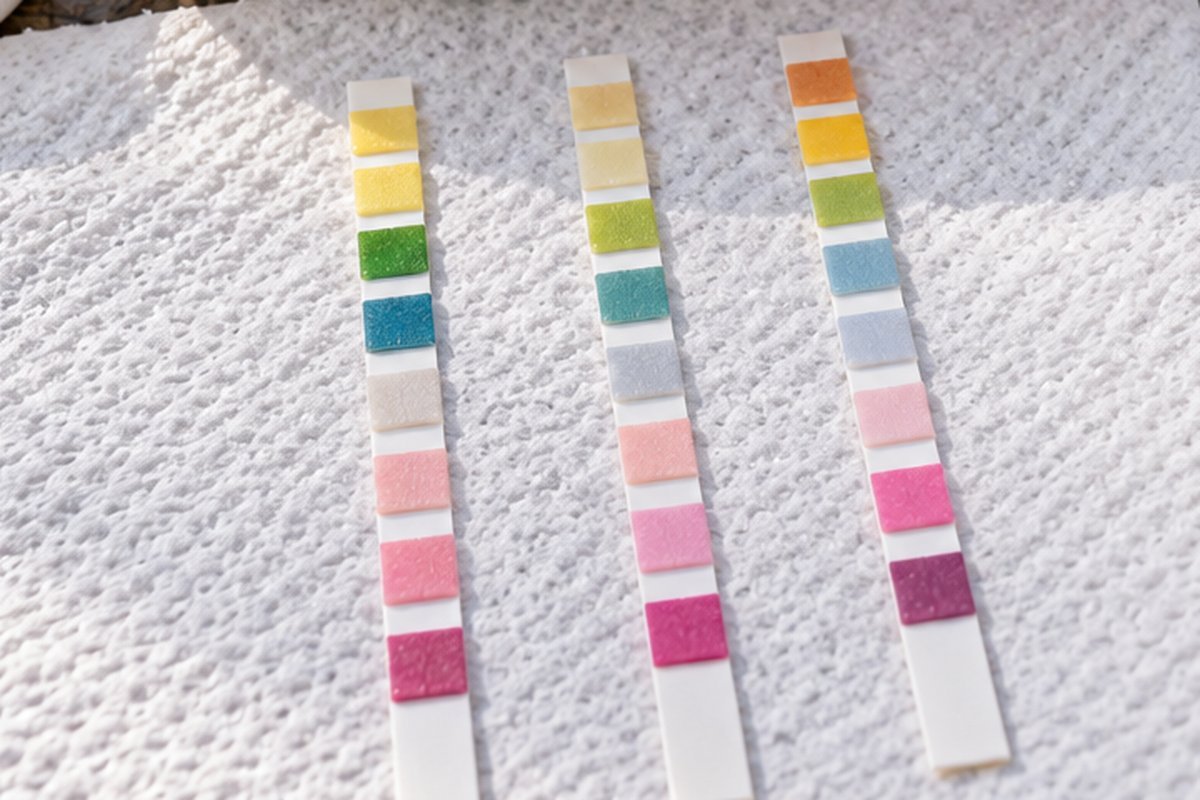
Test kits come in two main kinds. Liquid kits have you add drops to a small tube of pond water and compare the color to a chart. Test strips are dipped in the water and read against a chart on the bottle. Strips are quicker and easier, while liquid kits usually give a more exact reading. Both work well enough for a garden pond as long as you follow the timing in the instructions and read the colors in good light.
The trick is checking what each kit actually tests, because no single kit covers everything. The API Pond Master Test Kit is a liquid kit for pH, ammonia, nitrite, and phosphate, with over 500 tests. It does not test KH or nitrate. The API Pond 5-in-1 Test Strips cover pH, nitrite, nitrate, KH and GH, but not ammonia. Used together, the two cover every test on this page.
If you would rather keep things simple, a liquid ammonia kit plus a set of strips covers the most important readings for less money. The API Ammonia Test Kit is sold for aquariums and tests total ammonia, which is exactly what the checker above needs. For a precise KH reading, the API Carbonate Hardness Test Kit counts drops until the color changes. Its results are in dKH, which the checker can read directly.
| Kit | Type | Tests | Missing |
|---|---|---|---|
| API Pond Master Test Kit | Liquid | pH, ammonia, nitrite, phosphate | KH, nitrate |
| API Pond 5-in-1 Test Strips | Strips | pH, nitrite, nitrate, KH, GH | Ammonia |
| API Ammonia Test Kit | Liquid | Total ammonia | Everything else |
| API Carbonate Hardness Test Kit | Liquid | KH | Everything else |
Test kits in this guide4 items

Liquid kit
API Pond Master Test Kit
pH, ammonia, nitrite and phosphate, with over 500 tests. No KH or nitrate
Check Price on Amazon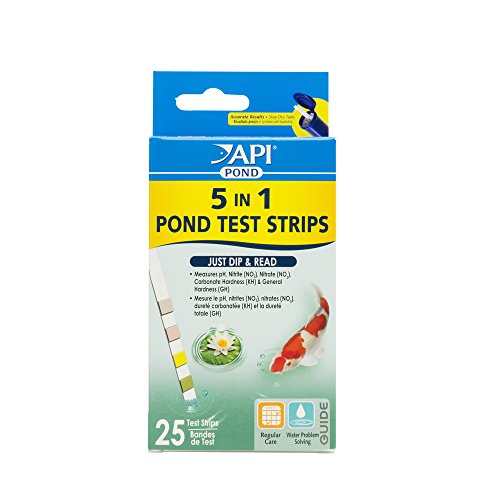
Test strips
API Pond 5-in-1 Test Strips
pH, nitrite, nitrate, KH and GH. No ammonia
Check Price on Amazon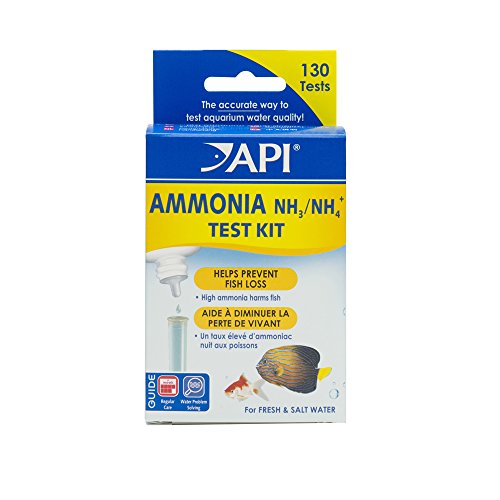
Ammonia
API Ammonia Test Kit
Tests total ammonia, the number the checker above uses
Check Price on Amazon
KH
API Carbonate Hardness Test Kit
Counts drops until the color changes for a precise KH reading
Check Price on AmazonHow to Get an Accurate Reading
Pond water testing is only as good as the sample and the timing. Small habits make a big difference to what the chart tells you.
- Take the sample from the middle of the pond, a few inches below the surface, not right next to the filter outlet or a waterfall.
- Rinse the test tube with pond water first, and keep the tubes clean and dry between tests.
- Read each color at the time the package gives, since reading too early or too late changes the result.
- Read the colors in good daylight or bright white light, not under a warm yellow bulb.
- Test at the same time of day each time, ideally the morning, so your log compares like with like. If ammonia is present, also test pH in the afternoon, when the toxic share is highest.
- Check the expiry date on the box. Old reagents and strips can give false readings.
- Test your tap water once too, so you know what you are adding during water changes. Always treat tap water with a dechlorinator that also handles chloramine.

Reading the Trend in Your Test Log
One test shows a single moment. A log shows the pattern. Rising nitrate over several weeks means it is time for more water changes or less food. KH that drops a little every week means your pond is using up its buffer and will need topping up before pH becomes unstable. In a new pond, the log shows ammonia peaking and falling, then nitrite doing the same, which means your filter has matured.
The checker keeps every saved test in your browser, marks each reading safe, watch, or act now, and draws a small trend line once you have two or more tests. Use the Download button now and then to keep a copy, since clearing your browser data will erase the log.
Pond Water Test Kit Questions
What should I test my pond water for?
Test ammonia, nitrite, pH, and KH. Ammonia and nitrite should be zero, pH should be about 6.5 to 8.5, and KH should be at least 50 ppm. Also check nitrate, because it feeds algae.
How often should I test my pond water?
Test about once a week in the warm months for an established pond, every day or two for the first six to eight weeks of a new pond, and right away if fish act strangely.
What is a safe ammonia level for a pond?
Zero is the goal. Any reading means waste is building up. How dangerous it is depends on pH and temperature, because warm, high-pH water turns more ammonia into its toxic form.
Are pond test strips accurate?
Test strips are accurate enough for routine checks if you follow the timing and read them in good light. Liquid kits usually give a more exact number, which helps when you are tracking a problem.
What time of day should I test pond water?
Test at the same time each day so you can compare readings. Morning is a good choice. pH is usually lowest a few hours after dawn and highest in the afternoon.
How do I lower ammonia in my pond fast?
Stop feeding for one to three days, change 25 to 50 percent of the water with dechlorinated water, add aeration, and check that the filter is running. Retest every day until ammonia reads zero.
The Bottom Line
A pond water test kit is the cheapest early warning system a pond owner can buy. Test ammonia, nitrite, pH, and KH weekly in warm weather, more often in a new pond, and always when fish act strangely. Read ammonia with pH and temperature, since warm, high-pH water makes the same reading far more dangerous. Keep a log, watch the trends, and fix small changes before they lead to fish losses. This guide is based on university Extension and aquaculture fact sheets and the test makers’ instructions. We have not tested these kits ourselves.